Market Orientation vs. Product Orientation: Who Is Your Business Really Built For?
Key Takeaways
- Product-oriented businesses focus on quality and innovation from the inside out.
- Market-oriented businesses prioritize consumer needs and market research to reduce risk.
- Successful strategy depends on the industry, the target market, and the business's goals.
- Market failure occurs when a business invests heavily in a product that the market does not value.
Introduction: The Philosophy of Your Business
When starting a business, you have to decide where your focus lies. Do you put the customer in the driver’s seat, or do you trust your internal vision to lead the way? In the world of Business Management, we call this the divide between market orientation and product orientation. Understanding the difference is vital for any budding entrepreneur, especially when considering how these strategies dictate your growth and success.
The Product-Oriented Approach: Driven by Vision
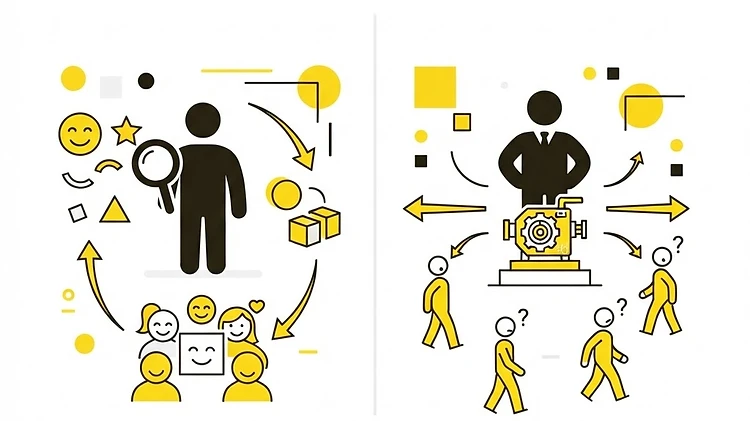
Imagine a brand called 'SoloKicks.' The founder, Marcus, is a sneaker obsessive who believes in one thing: the perfect leather aesthetic. He spends months sourcing rare materials, designing intricate patterns, and obsessing over the shape of the heel. He doesn't look at market surveys or customer reviews. He believes that if he builds a beautiful, high-quality product, the customers will naturally want it. This is product orientation. The focus is entirely on the product itself, the production process, and the technical mastery behind it.
Businesses like SoloKicks often thrive in niche markets where the founder has unique expertise. The strength here is innovation; you aren't constrained by what the average person says they want. The weakness? You risk building something that nobody actually wants to buy, or perhaps something that is too expensive for the mass market to justify.
The Market-Oriented Approach: Driven by Data
Now, contrast this with 'SyncStride,' another sneaker company. The team at SyncStride doesn't start with a sketch; they start with a spreadsheet. They conduct focus groups, analyze trends on social media, and survey thousands of potential buyers. When they hear that customers want breathable mesh for summer and a more affordable price point, they shift their design to match those requirements. This is market orientation. The business makes decisions based on the current needs and wants of the consumer.
SyncStride’s strength is flexibility. Because they base their decisions on customer feedback, their risk of 'market failure'—designing a product nobody buys—is significantly lower. However, the weakness is that they might lose their creative edge. If you only give customers what they ask for, you might fail to invent something truly revolutionary that they didn't even know they needed.
Making Decisions: A Simple Calculation
To understand how these businesses might track their success, let's look at a simple Sales Growth calculation. Suppose SoloKicks (Product-Oriented) had sales of $100,000 last year and $120,000 this year. To find the percentage growth, we use the formula: ((New Value - Old Value) / Old Value) * 100.
Calculation: (($120,000 - $100,000) / $100,000) * 100 = 20%.
Interpretation: This 20% growth tells SoloKicks that their niche strategy is gaining traction. If it were negative, they might need to reconsider whether their 'vision-only' approach is connecting with a large enough audience.
Key Terms
- Market Orientation: A business strategy that focuses on identifying and meeting the stated or hidden needs of customers.
- Product Orientation: A business strategy that focuses on the quality and design of the product rather than consumer demand.
- Market Failure: A situation where a product or service fails to attract enough customers to be profitable.
- Customer Loyalty: The willingness of a customer to return to a brand based on their positive experiences and alignment with their needs.
Exam Tip
Exam Tip: When asked to evaluate these strategies, never say one is inherently 'better.' Instead, identify the environment. A high-tech, fast-moving industry often requires market orientation, while an artistic or exclusive luxury brand might benefit more from product orientation.
Ultimately, whether you decide to lead with your vision or follow the voice of the market, the secret is consistent analysis. Stay curious, test your ideas, and keep refining your approach to ensure you are meeting the needs of your audience. Every successful business started as a single idea that was tested, adjusted, and polished until it fit perfectly into the real world. Practice, practice, practice!
Discussion Questions
- Define the primary difference between a business that uses market orientation and one that uses product orientation.
- If a business like 'SyncStride' finds that customer trends are changing rapidly, how should they adjust their research process?
- To what extent is a market-oriented approach always superior to a product-oriented approach in a competitive, fast-paced retail market?