STP Marketing: Segmentation, Targeting, and Positioning Made Simple
Key Takeaways
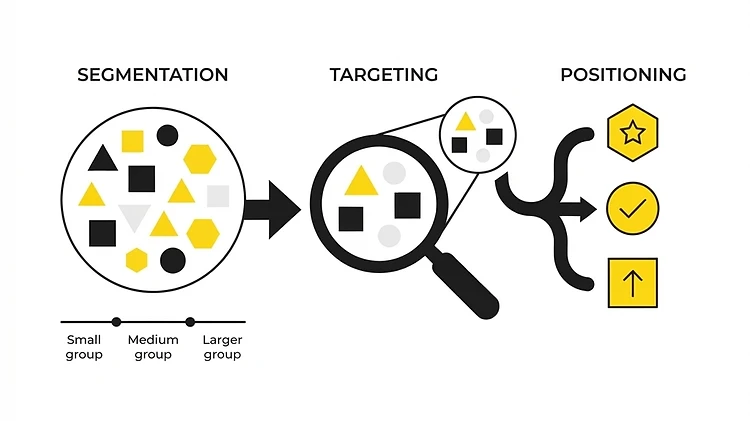
- Segmentation divides broad markets into smaller groups based on demographics, geography, or psychographics.
- Targeting is the strategic decision of which consumer groups a business will actively serve.
- Positioning creates a distinct, memorable image for the brand in the minds of the target audience.
- Market share calculations help businesses measure their competitive strength within a specific segment.
Mastering the STP Model: A Strategic Roadmap
Marketing is not about shouting at everyone in the room; it is about finding the right person who actually wants to hear your message. In the IB Business Management world, we use the STP model—Segmentation, Targeting, and Positioning—to turn a broad, messy market into a clear, profitable plan.
Step 1: Segmentation (Slicing the Pie)
Imagine you have created a new fitness app called 'FlexFlow.' You cannot just launch it to everyone on the planet, because a professional bodybuilder has completely different needs than a senior citizen looking for gentle mobility exercises. Segmentation is the process of breaking down a large, diverse market into smaller, manageable groups based on shared characteristics.
We typically segment markets by:
- Demographics: Age, gender, income, or occupation.
- Geographics: Where people live, local climate, or urban vs. rural settings.
- Psychographics: Lifestyle, personality, values, or interests.
Step 2: Targeting (Choosing Your Battle)
Once you have sliced the pie, you must decide which piece you want. This is Targeting. You are choosing the group (the target market) that is most likely to find value in your app and, more importantly, be willing to pay for it.
If FlexFlow decides to focus exclusively on 'Busy Urban Professionals' who only have fifteen minutes a day to work out, you are entering a niche market. Niche marketing is great because you can specialize your product to be exactly what they need, often allowing you to charge higher prices. Alternatively, a mass market approach would be trying to reach everyone by offering generic, low-cost features. Mass markets require huge scale to be profitable, but niche markets offer deeper customer loyalty.
Step 3: Positioning (Crafting Your Vibe)
Positioning is all about your place in the customer's mind. It is the story you tell about your brand compared to competitors. If FlexFlow positions itself as the 'premium, elite coaching app' for high-performers, you might use sleek, dark visuals and high-intensity workouts. If you position yourself as the 'affordable, friendly community app,' you might use bright colors and focus on social challenges. Positioning requires you to be distinct; if you look exactly like the other apps, customers will not know why they should choose you.
Putting Numbers to Work
Let us look at a quick way to assess market potential using a simple Market Share calculation. Suppose the total sales in the fitness app industry for your target segment is $500,000 per year. Your app, FlexFlow, manages to generate $75,000 in sales.
- Formula: (Your Sales / Total Market Sales) x 100 = Market Share %
- Calculation: ($75,000 / $500,000) x 100 = 15%
This 15% figure is crucial. It tells you that for every dollar spent in this segment, you are capturing 15 cents. If your share is small, you might need to improve your positioning or rethink your targeting strategy.
Key Terms
- Segmentation: The process of dividing a broad market into subsets of consumers with common needs.
- Targeting: Selecting the specific segment(s) to focus marketing efforts on.
- Positioning: The act of designing a company's image to occupy a distinctive place in the mind of the target consumer.
- Niche Market: A small, specialized segment of the market for a particular product or service.
- Mass Market: A large, undifferentiated market where the business targets a broad audience.
Exam Tip: When an exam question asks about the effectiveness of an STP strategy, always mention how well the company matches its 'Marketing Mix' (the 4Ps) to their chosen target segment. If the segment is price-sensitive, but the product is positioned as a luxury good, the strategy is likely to fail.
Final Thoughts
Success in marketing isn't about being everything to everyone; it's about being everything to the right someone. By clearly segmenting, thoughtfully targeting, and precisely positioning your brand, you turn your business from a guessing game into a deliberate strategy. Now, take these concepts and try applying them to a brand you use every day—keep refining your skills, and remember, success is all about practice, practice, practice!
Discussion Questions
- What are the three main criteria businesses typically use to segment their consumer markets?
- If a local coffee shop decides to focus exclusively on university students rather than the general public, what are the potential advantages and disadvantages of this niche strategy?
- Evaluate the effectiveness of using the STP model for a company entering a market with high levels of existing competition.