What Is a Unique Selling Point? Ways to Stand Out in a Crowded Market
Mr. ColemanOct 2, 20263 min read
Key Takeaways
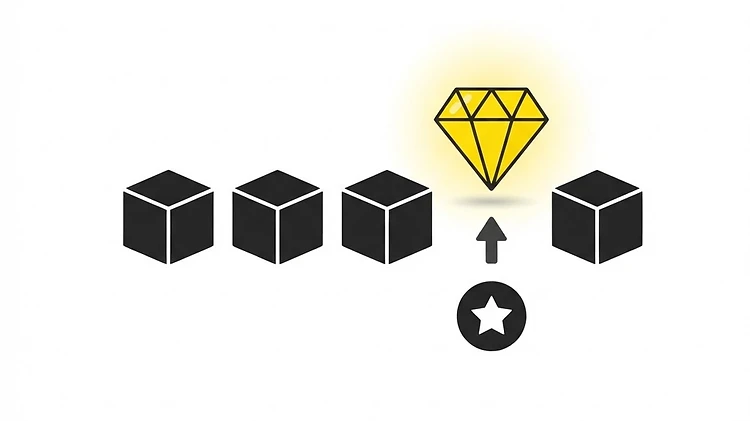
- A USP is the unique reason a customer chooses you over the competition.
- Differentiation prevents businesses from being forced into destructive price wars.
- A strong USP must solve a specific pain point for your target audience.
- Value proposition calculations can help justify premium pricing strategies.
What Exactly Is a Unique Selling Point? In a world where you can buy almost anything with a few clicks, why should a customer choose you over everyone else? This is the central question of the Unique Selling Point, or USP. A USP is that singular, powerful attribute that makes your business stand out from the competition. It is the specific benefit you offer that your competitors cannot or do not match. Without a clear USP, your business risks becoming a commodity—something people only buy because it is cheap, rather than because they actually want it. ## Why Does Differentiation Matter? Differentiation is the strategic act of making your product or service seem distinct in the mind of the consumer. If you do not differentiate, you fall into the trap of price competition. When a customer sees your product as identical to the one on the next shelf, they will always choose the cheaper option. Differentiation allows businesses to build brand loyalty, charge premium prices, and insulate themselves from the constant pressure of undercutting rivals. Whether it is superior quality, an innovative feature, or an exceptional level of customer service, differentiation tells the customer exactly why they are making the right choice. ## Three Ways to Stand Out: Fictional Case Studies To understand how this works, let us look at three fictional small businesses. First, consider 'Bloom & Brew,' a small local cafe. Instead of just selling coffee, they differentiate through 'Hyper-Local Sourcing.' Every single bean is roasted in the same town, and every pastry is made with ingredients from farms within a ten-mile radius. Their USP is extreme local transparency. Second, look at 'FixIt Fast Tech,' a smartphone repair shop. While other shops focus on low prices, 'FixIt Fast' differentiates through a 'Two-Hour Guarantee' or the repair is free. Their USP is speed and reliability. Finally, consider 'EcoSpark,' a manufacturer of bamboo toothbrushes. They differentiate by donating a portion of every sale to coastal plastic cleanup initiatives. Their USP is ethical social impact. ## Calculating Your Competitive Edge: The Price-Value Gap In business, we often analyze if our USP justifies a higher price point. If your USP is 'premium quality,' you might calculate your Price-Value Gap. Formula: Value Proposition Score = (Perceived Quality / Price). Let’s say 'Bloom & Brew' sells a coffee for $5.00 with a high perceived quality score of 9 out of 10. 9 / 5 = 1.8. A mass-market competitor sells a coffee for $2.50 but has a perceived quality of 3 out of 10. 3 / 2.5 = 1.2. Interpretation: Even though the competitor is cheaper, Bloom & Brew has a significantly higher value proposition score of 1.8, meaning customers are getting more 'value' per dollar despite the higher sticker price. ## Build-Your-Own-USP Exercise If you were starting a new business, how would you define your USP? Grab a pen and follow these three steps: 1. List your top three competitors. 2. Identify one 'pain point' your customers have (e.g., waiting too long, poor quality, bad service). 3. Create a 'Signature Promise' that directly solves that pain point in a way your competitors currently ignore. This is your foundation. ## Key Terms - Unique Selling Point: A specific feature or benefit that distinguishes a business from its competitors. - Differentiation: The process of distinguishing a product or service from others to make it more attractive. - Commodity: A basic good or service that is seen as interchangeable with others in the market. - Value Proposition: The promise of value to be delivered and the primary reason a customer buys from you. Exam Tip: When writing an exam response, always link your chosen USP back to the target market. A USP is only effective if the specific segment of customers you are targeting actually values that particular benefit. Remember that differentiation is not just about being 'different'; it is about being better for your specific customer. Keep refining your ideas until they shine, and always remember: practice, practice, practice!
Discussion Questions
- How does a company’s mission statement influence its ability to create a clear Unique Selling Point?
- If a competitor copies your USP, what strategies could a business use to maintain its competitive advantage?
- Evaluate the importance of a USP for a new startup compared to a well-established multinational corporation.
Share