Exam Technique: Command Terms and How to Answer Long Questions
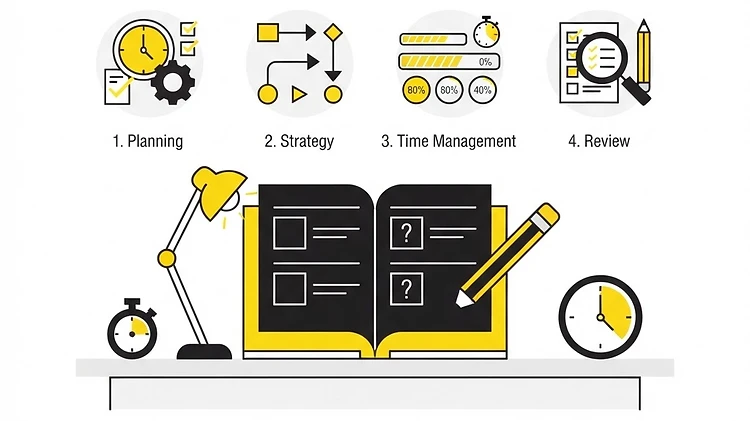
Key Takeaways
- Command terms dictate the required depth and structure of your response.
- Always apply theoretical concepts to the specific business context provided in the case study.
- A high-level answer requires a balanced evaluation that weighs different perspectives.
- Time management is critical; allocate minutes based on the number of marks per question.
Cracking the Code: Mastering IB Business Management
Many students fear the long-answer questions in Business Management exams. They feel the pressure of the clock and worry about missing the examiner's specific expectations. However, writing a high-scoring response is not about memorizing entire textbooks; it is about understanding exactly what the examiner wants from you through command terms.
Understanding the Command Terms
Think of command terms as the "instructions" for your answer. If a question asks you to 'Define', it wants a clear, accurate statement of meaning. If it asks you to 'Analyze', it wants to see the causes and effects of a business situation. If it says 'Evaluate', you must weigh up the pros and cons to reach a supported conclusion. Using the wrong approach is the most common reason students lose marks.
The Architecture of a Strong Answer
For high-mark questions, use a clear structure: The Point, The Evidence, The Explanation, and The Evaluation. Start with a direct answer to the question. Next, integrate concepts from your course. Finally, link it back to a fictional company like 'Zenith Zest,' a smoothie startup. Instead of just saying 'marketing is good,' explain why Zenith Zest’s social media strategy creates brand loyalty, which then increases repeat purchases and improves cash flow. This 'connect the dots' approach demonstrates application.
Worked Example: A Case Study
Let's imagine the question: 'Discuss the impact of a high staff turnover rate on Zenith Zest.'
Level 1 (Weak): 'High staff turnover is bad for Zenith Zest because it costs money to train new people and customers might get annoyed by slow service.' (Basic point, no deep link).
Level 2 (Moderate): 'High turnover at Zenith Zest means the HR department spends more on recruitment and training, reducing profit margins. Furthermore, service quality drops because new staff lack experience, potentially hurting the brand's reputation.' (Better; shows cause and effect).
Level 3 (Strong): 'While high turnover initially increases recruitment costs, the impact on Zenith Zest depends on their recruitment strategy. If they hire students, turnover is expected. However, losing key managers is a major threat to the company’s vision. Long-term, if they invest in a better company culture, they could improve retention, though this requires upfront investment. Ultimately, the cost of replacing staff may outweigh the cost of retention initiatives.' (Evaluates two sides and reaches a judgment).
Managing Your Time
Divide your time by marks. If a question is worth 10 marks, you have roughly 15 minutes. Spend two minutes planning your argument, ten minutes writing, and three minutes reviewing. Always check that you have actually answered the specific question asked, rather than writing everything you know about the topic.
Calculating Success: The Profit Margin
When a question asks you to calculate something, show your work clearly. Formula: (Net Profit / Revenue) x 100. If Zenith Zest has a Net Profit of $20,000 and Revenue of $100,000, the calculation is ($20,000 / $100,000) x 100 = 20%. This 20% margin means that for every dollar earned, Zenith Zest keeps 20 cents as profit after all expenses, showing efficiency in cost control.
Key Terms
- Command Terms: The specific instruction words (e.g., 'Discuss', 'Examine') that dictate how to answer.
- Application: Connecting your theoretical knowledge to the specific context of a provided business case study.
- Evaluation: Weighing the significance of different factors to arrive at a reasoned judgment or recommendation.
- Profit Margin: A ratio showing what percentage of revenue remains after expenses are paid.
Exam Tip: Always underline the command term in the question paper; it is your roadmap for what the examiner is looking for in your written response.
Consistency is your best friend, so keep practicing until every answer becomes second nature.
Discussion Questions
- What is the difference between the command terms 'Describe' and 'Analyze' in a business context?
- How would you apply the concept of 'organizational culture' to a fictional startup experiencing high staff turnover?
- To what extent is a formal, balanced evaluation more important than providing multiple points in a 10-mark essay question?