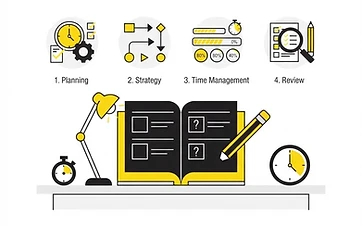
Practice, Practice, Practice: A Study Routine for Business Students
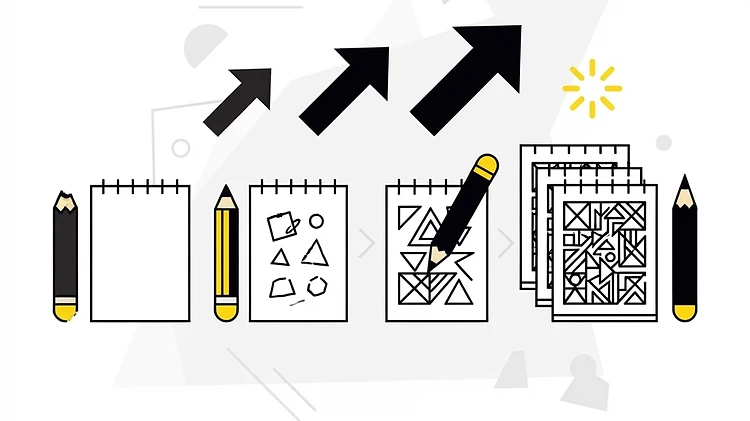
Key Takeaways
- Passive reading is less effective than active retrieval of information.
- Spaced repetition helps move concepts from short-term to long-term memory.
- Business Management is an applied subject requiring practice with quantitative and qualitative scenarios.
- A structured, consistent weekly routine reduces stress and improves exam readiness.
Mastering Business Management: A Strategic Approach
Many students approach IB Business Management by simply reading through their notes, highlighting key concepts, or skimming textbooks. While this feels like work, it is often a passive process that leads to the illusion of competence. If you want to excel, you need to shift from passive review to active engagement. The secret is simple: practice.
The Power of Retrieval and Spaced Repetition
Retrieval practice is the act of forcing your brain to recall information without looking at your notes. Instead of re-reading a page on 'Motivation Theories,' close the book and try to explain them to a friend or write down a summary from memory. When you struggle to remember a concept, you are actually strengthening the neural pathways associated with that information.
Combine this with spaced repetition. Rather than cramming everything on a Sunday night, revisit topics at increasing intervals. If you study 'Break-even Analysis' today, review it again in three days, then again in a week. This combats the 'forgetting curve' and ensures the concepts are cemented in your long-term memory.
Practicing Past-Style Questions
Business Management is an applied subject. Knowing the definition of a 'Fixed Cost' is useless if you cannot identify it in a scenario. You must practice past-style questions to understand how examiners structure their inquiries. Take the fictional company 'Zenith Eco-Bikes.' If they produce 500 bicycles with a fixed cost of $20,000, a variable cost per unit of $100, and a selling price of $200, you need to be able to calculate their position.
Formula: Break-even Point = Fixed Costs / (Selling Price - Variable Cost) Calculation: $20,000 / ($200 - $100) = 200 units.
Interpretation: Zenith Eco-Bikes must sell 200 units just to cover their total costs. Any unit sold beyond that contributes directly to profit. Understanding this math is the foundation for deeper evaluation questions.
Building Your Weekly Study Routine
A solid routine keeps you consistent. Here is a simple plan you can adapt:
- Monday: Review notes from the previous week's lessons (15 mins).
- Tuesday: Apply one concept (e.g., SWOT Analysis) to a fictional case study like 'Blue Wave Surfboards' (30 mins).
- Wednesday: Practice one calculation-based question (30 mins).
- Thursday: Retrieval practice—close your books and map out an entire unit, like 'Marketing,' on a blank sheet of paper (20 mins).
- Friday: Review any areas from the week where you struggled (15 mins).
- Weekend: Complete one full past-style essay question under timed conditions.
Key Terms
- Retrieval Practice: The act of recalling information from memory to enhance learning retention.
- Spaced Repetition: The technique of reviewing material at increasing intervals to improve long-term memory.
- Fixed Costs: Business expenses that do not change with the level of production or sales volume.
- Variable Costs: Expenses that fluctuate in direct proportion to the volume of goods or services produced.
- Break-even Point: The level of output where total revenue equals total costs, resulting in zero profit or loss.
Exam Tip: When answering evaluative questions, always define your terms first, link your arguments back to the specific business in the prompt, and provide a balanced judgment that considers both short-term and long-term implications for the company.
Success in Business Management isn't about how many hours you stare at a page, but how effectively you engage with the material. By building a disciplined routine, you stop guessing and start knowing. Every question you answer and every concept you try to explain from memory brings you closer to your goal. Keep pushing, keep applying, and keep practicing until the process becomes second nature. Your hard work today will transform your performance tomorrow—just remember: Practice, Practice, Practice!
Discussion Questions
- What is the difference between active retrieval practice and passive review?
- If 'Global Tech Solutions' increases their fixed costs but lowers their variable costs, how would this affect their break-even point?
- To what extent is a consistent study schedule more important for success than raw intelligence in the IB Business Management course?