
Fixing Cash-Flow Problems: Strategies Startups Can Use Right Now
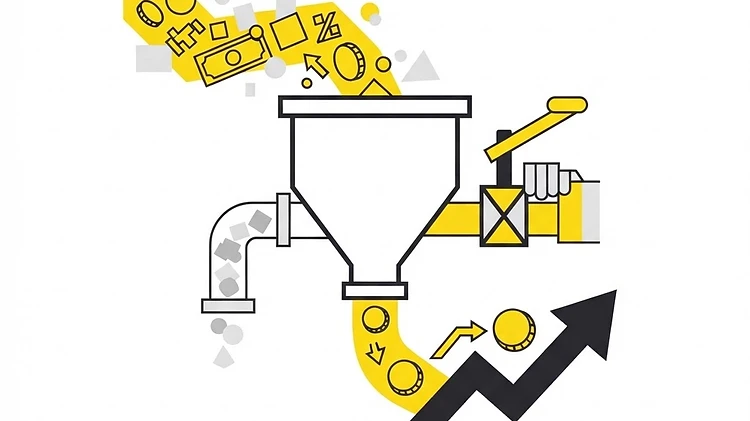
Key Takeaways
- Profitability and liquidity are two distinct concepts; a company can be profitable but still fail due to lack of cash.
- Short-term fixes like early payment discounts provide immediate liquidity but can reduce overall profit margins.
- Long-term stability requires proactive cash-flow forecasting and careful management of credit terms.
- Leasing equipment preserves cash flow compared to outright purchasing, though it may cost more in interest over time.
The Cash Crunch: A Survival Guide for Startups
Imagine running 'BeanBurst,' a trendy new coffee subscription service. You have plenty of customers, but your bank account is showing a dangerously low balance. You have bills to pay for coffee beans, shipping, and web hosting, but your customers have not paid their monthly invoices yet. This is the classic startup 'cash-flow trap.' Profit is not the same as cash; you can be profitable on paper but still go bankrupt if you run out of liquid money to pay your staff.
Immediate Fixes: The Short-Term Rescue
When a business like BeanBurst is staring at an empty account, immediate action is required. Short-term strategies are about urgency. One effective method is 'tightening credit terms.' If you currently give customers 30 days to pay, try shortening that to 15 days or offering a small discount for immediate payment.
Another approach is liquidating excess stock. If BeanBurst has crates of unsold reusable mugs taking up space, selling them at cost price is better than letting that money sit stagnant. You get immediate cash to pay for urgent expenses.
Let’s look at a quick calculation for an 'Early Payment Discount.' Suppose BeanBurst is owed $1,000 by a corporate client due in 30 days. You offer a 2% discount if they pay today.
Formula: Discounted Amount = Total Invoice * (1 - Discount Percentage) Calculation: $1,000 * (1 - 0.02) = $980.
Interpretation: You receive $980 today. While you technically 'lose' $20 of revenue, you gain the liquidity needed to pay your own suppliers immediately, avoiding late fees or supply chain interruptions.
Long-Term Strategies: Building Stability
While short-term fixes save you today, long-term strategies ensure you survive tomorrow. The goal is to balance the timing of your 'Cash In' (inflows) and 'Cash Out' (outflows). A major strategy is 'Improving Forecasting.' By using a rolling cash-flow forecast, BeanBurst can predict exactly when they will face a shortage months in advance, allowing them to secure a bank overdraft before the crisis hits.
Diversifying revenue streams is another long-term win. If BeanBurst stops relying solely on subscriptions and starts selling seasonal coffee gear, they smooth out their income.
Finally, consider 'Leasing vs. Buying.' If BeanBurst needs a high-end industrial roaster, buying it outright drains cash reserves. Leasing spreads the cost over years, preserving cash flow. While the total interest paid might make leasing more expensive in the long run, it keeps the business alive during the growth phase.
The Trade-offs of Management
Every decision has a cost. Short-term fixes, like offering discounts, can lower your profit margins. If you offer discounts too often, customers might expect them, and your long-term revenue will suffer. Conversely, long-term strategies, like leasing equipment, often mean you pay more in interest over the lifetime of the equipment. As an entrepreneur, you must weigh the immediate need for survival against the long-term impact on your business's health.
Key Terms
- Cash-flow forecast: A document that predicts the future cash inflows and outflows for a business.
- Liquidity: The ability of a business to convert assets into cash quickly to meet short-term obligations.
- Overdraft: A financial arrangement where a bank allows a business to withdraw more money than is currently in their account up to a limit.
- Credit Control: The process of ensuring that customers pay their invoices within the agreed terms.
Exam Tip: When analyzing cash-flow strategies in the exam, always discuss the impact on both liquidity (cash) and profitability. Many students mistakenly assume that increasing sales automatically fixes cash flow, but if those sales are on credit, your cash position might actually get worse before it gets better.
Moving Forward
Understanding cash flow is the difference between a failing dream and a thriving venture. Remember, managing money effectively is just as important as the product you sell. Keep analyzing your numbers, stay proactive with your planning, and you will find that mastering cash flow comes down to practice, practice, practice!
Discussion Questions
- Define liquidity and explain why a business might be profitable yet still face insolvency.
- How could a business like BeanBurst use an early payment discount to solve an immediate cash shortage?
- Evaluate the long-term trade-offs between using a bank overdraft to cover cash flow gaps versus diversifying product lines to increase revenue.


