Big Data, Virtual Reality, and the Internet of Things: Opportunities and Ethical Questions
Mr. ColemanOct 2, 20263 min read
Key Takeaways
- IoT provides real-time data through interconnected devices.
- Big Data analytics allows for precise, personalized customer insights.
- VR reduces costs by minimizing the need for large, physical inventory.
- Businesses must balance technological innovation with strict ethical data practices.
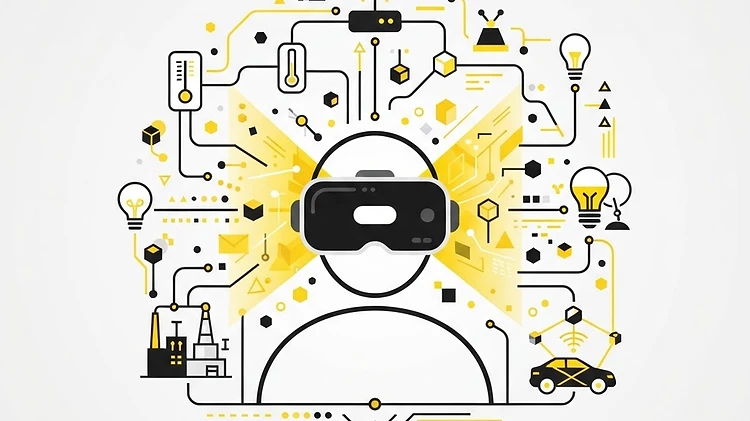
The Digital Transformation Era: How Businesses are Evolving In the modern business landscape, the convergence of Big Data, Virtual Reality (VR), and the Internet of Things (IoT) is not just a technological trend; it is a fundamental shift in how firms operate. Imagine a fictional furniture retailer called 'ModaSpace'. They are moving away from traditional physical catalogues and moving toward a fully integrated digital ecosystem. By leveraging these technologies, ModaSpace is redefining the customer experience while navigating complex ethical dilemmas. ## Big Data and IoT: The Power of Connectivity The Internet of Things refers to the network of physical objects—or 'things'—embedded with sensors, software, and other technologies that allow them to exchange data. For ModaSpace, this means selling 'Smart-Sofa' units. These sofas track usage patterns, such as the duration of sitting or the weight distribution, and transmit this data via IoT connectivity to the company’s servers. This is where Big Data comes in. Big Data describes the massive volumes of structured and unstructured information that can be analyzed to reveal trends, patterns, and associations. ModaSpace collects this data to understand exactly which features are used most, helping their R&D department design better products. ## VR and the Customer Journey ModaSpace also utilizes VR to create 'Infinite Showrooms.' Instead of stocking thousands of physical items, customers wear a headset to visualize any piece of furniture in a 3D simulation of their own living room. This reduces inventory holding costs—a key financial metric for retailers. To understand the impact, let us calculate the potential Return on Investment (ROI) for a VR installation. Formula: ROI = (Net Profit / Cost of Investment) x 100. If the VR showroom costs $50,000 to implement but leads to a reduction in inventory storage costs of $75,000 annually, the calculation is: (($75,000 - $50,000) / $50,000) x 100 = 50%. This 50% ROI suggests that the VR investment is highly profitable, allowing the firm to redirect capital toward other growth areas. ## The Ethical Tightrope As a business manager, you must look beyond the profit. The collection of Big Data raises significant privacy concerns. If ModaSpace tracks how long a customer spends on their sofa, are they infringing on personal privacy? There is a thin line between 'customized marketing' and 'invasive surveillance.' Furthermore, the reliance on IoT creates cyber-security risks. If a hacker gains access to the ModaSpace database, they could potentially map out the daily routines of thousands of households. Businesses have a moral obligation to ensure transparency, giving customers the right to opt-out of data tracking. Transparency isn't just an ethical choice; it is a legal requirement in many jurisdictions under data protection regulations. ## Strategic Implications for Businesses The adoption of these technologies requires a shift in human resource management. Staff need to be upskilled to manage these complex digital systems. Moreover, there is the risk of the 'digital divide,' where customers who are not tech-savvy are effectively alienated from the brand. ModaSpace must balance high-tech innovation with traditional accessibility to ensure they do not lose their core market segments. ## Key Terms - Big Data: Extremely large datasets that may be analyzed computationally to reveal patterns and human behavior. - Internet of Things (IoT): The interconnection of computing devices embedded in everyday objects, enabling them to send and receive data. - Virtual Reality (VR): A computer-generated simulation of an environment that can be interacted with using specialized equipment. - ROI: A performance measure used to evaluate the efficiency of an investment by comparing the gain from an investment to its cost. ## Exam Tip: Exam Tip: When analyzing technological integration in the IB Business Management exam, always link the technology to a specific business objective, such as increasing market share, reducing costs, or improving brand loyalty. Avoid merely describing the tech; explain its impact on the firm's bottom line. The path to mastering digital strategy is paved with constant review, critical thinking, and consistent effort. Practice, Practice, Practice!
Discussion Questions
- How do the Internet of Things and Big Data differ in their functions within a modern business?
- How could a company like ModaSpace use VR to gain a competitive advantage in a crowded furniture market?
- To what extent does the use of Big Data for consumer insights outweigh the potential risks to customer privacy?
Share