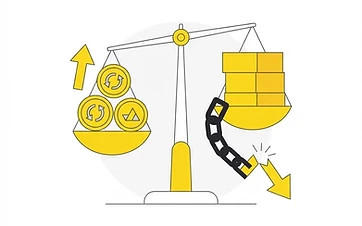
Budgets and Variance Analysis: Planning vs. Reality
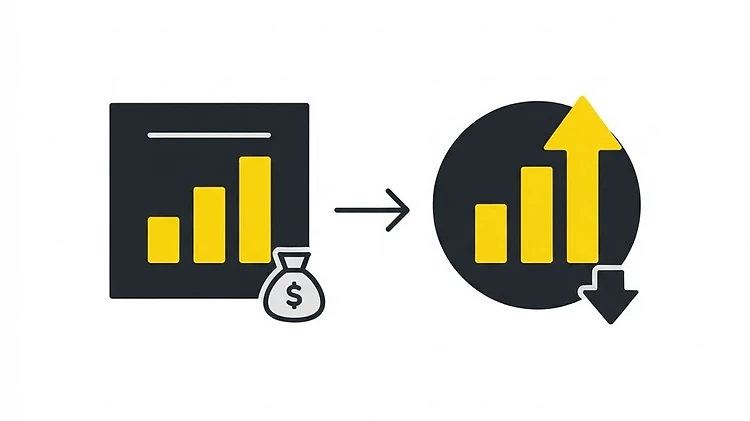
Key Takeaways
- A budget serves as a financial blueprint for future performance.
- Cost centers track spending, while profit centers track both income and expenses.
- Variances identify where actual performance deviates from the initial plan.
- Favorable variances improve profit, while adverse variances reduce it.
- Variance analysis provides actionable data to refine future decision-making.
Planning vs. Reality: The Power of Budgets
Imagine you are organizing a massive music festival. You estimate it will cost $50,000 to hire bands and rent the equipment, and you hope to make $80,000 in ticket sales. That financial roadmap is your budget. A budget is simply a quantitative statement of the future, acting as a guide for what a business expects to earn and spend. Without one, you are flying blind.
In larger organizations, we use cost and profit centers to manage these budgets. A cost center is a department, such as the maintenance team at 'Galaxy Events', that is accountable for its expenses but does not directly generate revenue. A profit center, like our 'Merchandise Stall', is responsible for both its costs and its revenue. This structure allows managers, known as budget holders, to take ownership of their financial performance.
The Reality Check: Variance Analysis
No matter how precise your planning, reality rarely matches the budget perfectly. This is where variance analysis comes in. A variance is the difference between the budgeted figure and the actual result. We categorize these as either favorable (F), which helps profit, or adverse (A), which hurts profit.
Let’s look at a worked example for 'Tech-Club Trivia Night', a fundraiser organized by a school group. They budgeted for 100 tickets at $10 each ($1,000 revenue) and $400 in snack costs.
Variance Table for Tech-Club Trivia
| Item | Budgeted | Actual | Variance | Type | | :--- | :--- | :--- | :--- | :--- | | Revenue | $1,000 | $1,200 | $200 | Favorable | | Snack Costs | $400 | $500 | $100 | Adverse |
To calculate the variance: Variance = Actual result - Budgeted result. For revenue, $1,200 - $1,000 = +$200 (Favorable). For costs, $500 - $400 = $100 (Adverse, because spending more than planned reduces profit).
Interpretation: The club made $200 more revenue than expected, which is great. However, they overspent on snacks by $100. Despite the overspending, the net impact is a $100 increase in total profit ($200 - $100 = $100). Analyzing these numbers helps the club decide if they should charge more for snacks next time or if they should switch suppliers.
Why Variances Matter for Decision Making
Variances act as an early warning system. If a cost center is consistently reporting adverse variances, it might indicate inefficient processes, poor negotiation with suppliers, or simply rising inflation. Conversely, large favorable variances in revenue might suggest the business has underpriced its product, meaning it is leaving money on the table.
For a business like 'Mountain Peak Guiding', analyzing variances is critical to survival. If their fuel costs for mountain expeditions are higher than budgeted, they must immediately investigate. Is it because the guides are taking longer routes, or have local petrol prices spiked? If it is the former, the manager can provide better training; if it is the latter, they must adjust their price list to maintain healthy margins.
Managing Through Numbers
Variance analysis is not just about finger-pointing. It is about learning. When variances occur, budget holders must investigate the root cause. This helps in setting more realistic budgets for the next cycle. It also empowers the team, as everyone understands that every dollar spent is a choice that affects the bottom line.
Key Terms
- Budget: A formal plan that expresses a business's expected financial performance over a specific period.
- Budget Holder: The specific individual responsible for managing and controlling the budget of a department or project.
- Cost Center: A specific section or department that generates costs but does not generate revenue directly.
- Variance: The numerical difference between the budgeted amount and the actual financial outcome.
- Adverse Variance: A situation where actual results are worse for the profit than the budget predicted.
Exam Tip: Always remember that in business exams, a higher actual cost than the budget is an adverse variance, while a higher actual revenue than the budget is a favorable variance. Watch your signs carefully when calculating.
Mastering your budget is the ultimate way to turn your strategic goals into actual success. Keep analyzing, and remember: Practice, Practice, Practice!
Discussion Questions
- What is the fundamental difference between a cost center and a profit center in a large retail business?
- If a business reports an adverse variance in raw material costs, what are two potential operational reasons for this outcome?
- To what extent is variance analysis an effective tool for improving organizational accountability?