Cybercrime and Cybersecurity: What Every Business Must Know
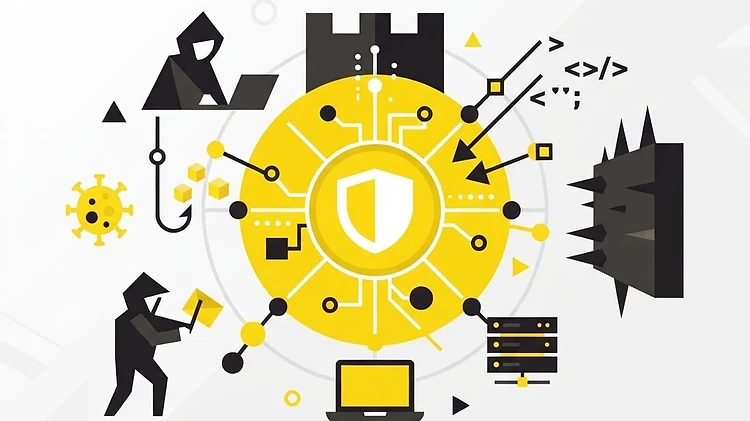
Key Takeaways
- Cybercrime targets human error more frequently than complex system flaws.
- The cost of a data breach includes both direct financial loss and long-term damage to brand equity.
- Implementing Multi-Factor Authentication and regular staff training are the most cost-effective defenses.
- Maintaining offline backups is the ultimate fail-safe against ransomware attacks.
The Hidden Cost of a Click
Imagine you own 'Bean & Brew,' a thriving local coffee roastery. One Tuesday morning, your head barista, Sarah, receives an email that looks exactly like a standard internal memo from your accounting software provider. It asks her to 're-verify' login credentials to ensure uninterrupted service. She clicks the link, enters your master username and password, and within seconds, your business database is encrypted by ransomware. This is the reality of cybercrime: it is rarely a sophisticated 'hacker in a hoodie' breaking through a firewall; it is almost always human error triggered by a simple phishing email.
Understanding the Landscape
Cybersecurity is no longer an optional 'IT issue'; it is a core business function. For businesses, cybercrime represents an attack on digital capital. Whether it is theft of customer data, disruption of supply chains, or the hijacking of critical infrastructure—like the automated temperature-control systems that keep your coffee beans fresh—the impact is devastating. In the IB Business Management context, think of this as an external environmental factor (STEEPLE analysis) that creates significant operational risk.
The Cost of Negligence
To understand the gravity, we must quantify the risk. Consider the Cost of Data Breach formula: Total Cost = (Number of Lost Records × Cost per Record) + Incident Response Expenses.
Let’s say Bean & Brew lost 500 customer records in the attack. If the average cost to remediate one record (legal fees, notification costs, and fines) is $150, and the immediate incident response cost (forensic experts) is $10,000, the calculation is:
Total Cost = (500 × $150) + $10,000 = $85,000.
This $85,000 is a direct hit to your net profit. For a small business, this loss is often the difference between growth and insolvency. This illustrates why cybersecurity is an essential investment, not an expense.
Practical Protection for the Small Business
What should Bean & Brew have done? First, implement Multi-Factor Authentication (MFA). If Sarah had MFA enabled, the attacker would have needed a physical device code in addition to the password. Second, staff training is vital. By cultivating a 'security-first' culture where employees are taught to hover over links to verify URLs, the threat of phishing is reduced by over 80%. Finally, maintain off-site, offline backups. Had Bean & Brew followed the 3-2-1 backup rule—three copies of data, two different media types, one off-site—they could have wiped their systems and restored from a backup without paying the ransom.
Protecting Critical Infrastructure
Larger businesses or those in logistics and manufacturing often rely on the Internet of Things (IoT). These connected devices represent a massive attack surface. Protecting critical infrastructure requires 'network segmentation,' which keeps your coffee roasting machines on a different network than your office email server. If a device is compromised, it cannot spread like wildfire through your entire enterprise.
Key Terms
- Phishing: A fraudulent attempt to obtain sensitive information by disguising as a trustworthy entity.
- Ransomware: A type of malicious software designed to block access to a computer system until a sum of money is paid.
- Encryption: The process of encoding information so that only authorized parties can access it.
- Critical Infrastructure: Physical or virtual systems so vital that their incapacity would have a debilitating impact on business operations.
Exam Tip: When answering a question about cyber threats, always link the risk to the 'Business Objectives.' A successful cyberattack can destroy brand reputation (marketing), stop production (operations), and drain cash reserves (finance), making it a cross-functional catastrophe.
In the digital age, security is built through consistent habits, so remember that mastery comes through Practice, Practice, Practice!
Discussion Questions
- Define the term 'phishing' and explain why it remains the most successful method for cybercriminals to gain unauthorized access.
- How could the implementation of the 3-2-1 backup rule have prevented the financial catastrophe described in the Bean & Brew scenario?
- Evaluate the view that for small businesses, the costs of high-level cybersecurity measures outweigh the potential risks of a cyberattack.