Revenue 101: How Businesses Earn Money

Key Takeaways
- Revenue is the total income from sales before any costs are deducted.
- The revenue formula is Price multiplied by Quantity Sold.
- Businesses can build resilience by having multiple revenue streams like sales, services, and subscriptions.
- Profit is the residual amount after all costs have been subtracted from total revenue.
Understanding the Lifeblood of Business: Revenue
When we talk about the success of a business, the first thing people usually mention is profit. But before a business can even dream of making a profit, it must first bring in money from its customers. In the world of business management, we call this flow of money 'revenue.' Think of revenue as the top line of your financial statements; it is the starting point for every calculation of business success.
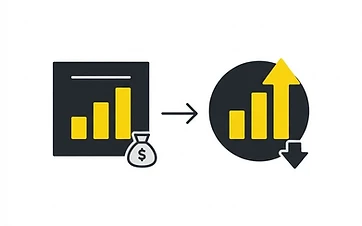
At its simplest level, revenue is the total amount of money a business receives from selling goods or providing services during a specific period. It is important to remember that revenue is not the same as profit. Revenue is the 'gross' intake—the total cash flowing into the till. Profit, on the other hand, is what remains after you have paid all your costs, taxes, and expenses. You can have high revenue but still lose money if your costs are too high.
The Formula for Success
Calculating revenue is straightforward, but it is vital to be precise. The basic formula is: Total Revenue = Price of Goods × Quantity Sold. Let's look at a fictional business called 'Luna’s Artisan Bakery.' If Luna sells 100 loaves of bread for $5 each in a single day, her total revenue is $500 (100 × $5). This represents the total value of her sales before she spends a single cent on flour, yeast, or electricity.
Diversifying Your Revenue Streams
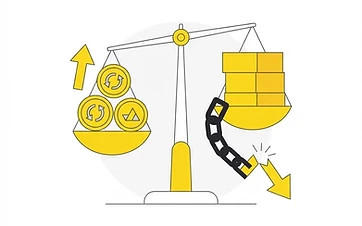
Successful businesses often don't rely on just one way to make money. A 'revenue stream' is a specific source from which a company generates income. By diversifying, businesses can protect themselves; if one stream dries up, the others keep the lights on.
Let’s consider 'Peak Adventure Gear,' a fictional shop that sells outdoor equipment. Peak Adventure Gear utilizes three distinct revenue streams:
- Product Sales: Selling backpacks and tents directly to customers. If they sell 50 backpacks at $100 each, that is $5,000 in revenue.
- Service Revenue: Offering professional equipment repair services. If they perform 20 repairs at $40 each, that is $800 in revenue.
- Subscription Revenue: A premium membership program that gives local hikers access to trail guides and maps for $10 per month. If they have 200 members, that is $2,000 in revenue.
By combining these, Peak Adventure Gear generates a total daily/monthly revenue of $7,800. Notice how the subscription stream provides 'recurring' revenue, which is predictable and stable, unlike the more sporadic product sales.
Revenue vs. Profit: The Critical Distinction
Many students confuse revenue with profit. To clarify, imagine Peak Adventure Gear has $7,800 in revenue, but they spent $6,000 on inventory, rent, and staff wages. Their profit is calculated as Revenue minus Expenses ($7,800 - $6,000), leaving a net profit of $1,800. Revenue measures how much money you collect; profit measures how much you actually keep. A business can survive for a while with low profit, but it cannot survive for long without revenue.
Key Terms
- Revenue: The total income generated by the sale of goods or services related to the primary operations of a business.
- Revenue Stream: An individual source of income for a business, such as product sales, subscriptions, or service fees.
- Profit: The financial gain remaining after all business costs and expenses have been deducted from total revenue.
- Gross Revenue: The total income from sales before any deductions or expenses are taken into account.
Exam Tip: When solving finance questions in your IB exam, always check if the question asks for 'total revenue' or 'profit.' If you are asked to calculate revenue, do not subtract costs; if you are asked for profit, ensure you have subtracted all costs from the revenue figure.
Understanding the mechanics of money is the first step toward becoming an effective business leader. By mastering how revenue is generated and how it flows through a company, you gain a clearer picture of how businesses function in the real world. Keep analyzing the numbers and exploring how different strategies impact the bottom line. The path to proficiency is built on constant review and application, so keep up the momentum—Practice, Practice, Practice!
Discussion Questions
- What is the fundamental difference between total revenue and net profit?
- If a company like Peak Adventure Gear decides to lower its prices, what impact might this have on its total revenue and quantity sold?
- Evaluate the benefits and drawbacks of a company relying on a single revenue stream versus diversifying into multiple streams.