Which Investment Appraisal Method Should You Trust?

Key Takeaways
- Payback Period focuses on liquidity and time to recover costs.
- ARR considers total profitability over the life of an asset.
- NPV is the most accurate method as it accounts for the time value of money.
- Qualitative factors like brand reputation and staff morale are just as important as the numbers.
Choosing the Right Tool for the Job
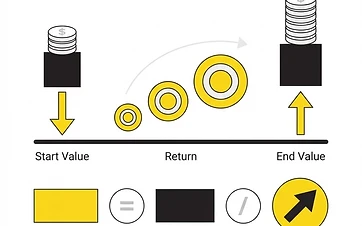
Imagine you are the manager of 'Summit Scoops,' a local ice cream chain. You have a chance to buy a high-tech, automated churn machine that costs $20,000. It will save you labor costs, but it is a big commitment. As a manager, you need to decide if this investment is worth it. In IB Business Management, we use three main tools to figure this out: Payback Period, Average Rate of Return (ARR), and Net Present Value (NPV). Each tells a different story about your money.
Understanding the Big Three
Payback Period focuses on speed. It asks, 'How long until I get my initial investment back?' The formula is simply: Cost of Investment / Annual Cash Flow. If the churn machine saves you $5,000 a year, it takes 4 years to pay back. It is simple and helps with cash flow, but it ignores any profit made after those 4 years.
ARR looks at profitability. It measures the average annual return as a percentage of the initial cost. The formula is: (Total Profit / Number of Years) / Initial Investment x 100. If your machine makes $10,000 total profit over 5 years, the annual profit is $2,000. Divided by $20,000, that is a 10% ARR. It considers the entire life of the project, which is a major upgrade from Payback.
NPV is the gold standard because it accounts for the 'time value of money.' Since $1 today is worth more than $1 in the future, NPV discounts future cash flows. If the NPV is positive, the project adds value to the firm. While complex, it is the most accurate way to judge long-term wealth creation.
Model Memo: Summit Scoops
To: Board of Directors From: Operations Manager Subject: Recommendation for Automated Churner Investment
After evaluating the $20,000 automated churner, I recommend we proceed despite the initial capital outlay.
- Payback Period: The machine pays itself back in 3.5 years. This aligns with our liquidity needs.
- ARR: We expect an average annual return of 12%, which exceeds our 8% threshold.
- NPV: Using a discount rate of 5%, the NPV is positive at $1,250, indicating the project adds genuine value.
While the numbers are strong, I must highlight that this machine requires specialized staff training, which could disrupt operations for two weeks. If we can mitigate this training risk, the quantitative indicators strongly support the purchase.
When Numbers Aren't Enough
Numbers are wonderful, but they are not the whole story. You must consider qualitative factors. Could the new machine damage your brand's 'hand-crafted' image? Does it negatively affect staff morale because workers feel replaced by robots? Are there environmental regulations you might violate? A high NPV is worthless if the investment ruins your reputation. Always balance the spreadsheet with the reality of your business context.
Key Terms
- Payback Period: The time taken for an investment to earn back its original cost through generated cash flows.
- ARR: A measure of the average annual profit of an investment expressed as a percentage of the initial capital cost.
- NPV: The total value of future cash flows minus the initial investment, adjusted for the time value of money.
- Qualitative Factors: Non-numerical elements, such as brand reputation or staff morale, that influence business decision-making.
Exam Tip: When a question asks you to 'recommend,' never just pick the option with the highest number. You must use the data provided in the prompt to justify your choice, discuss the limitations of your calculations, and mention at least one qualitative factor that could change the outcome.
Making the right financial decisions takes practice, patience, and a critical eye for both data and context. Keep analyzing, keep questioning, and keep refining your approach!
Discussion Questions
- What is the fundamental difference between calculating the Payback Period and calculating NPV?
- If a project has a high ARR but a long Payback Period, why might a business choose to reject it?
- Evaluate the importance of qualitative factors when making long-term investment decisions for a multinational corporation.